
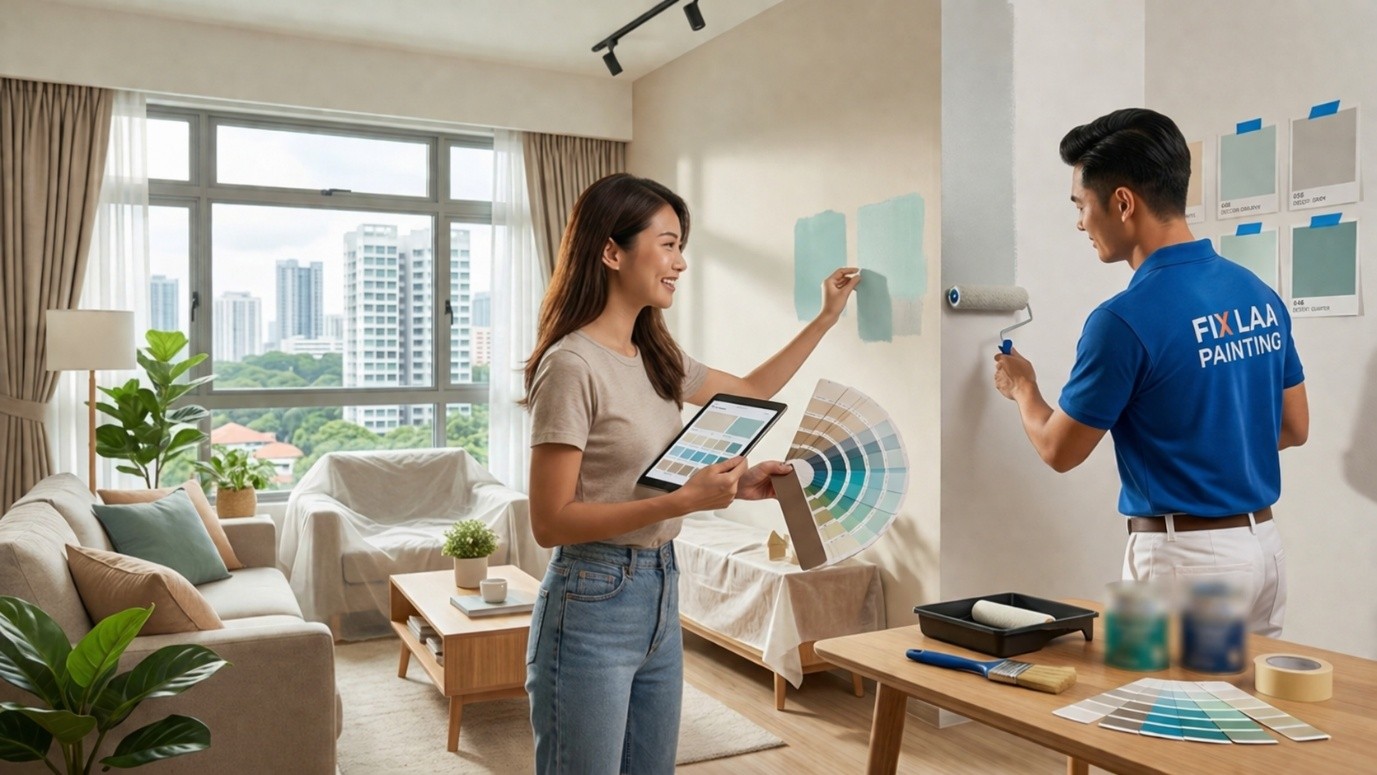
However, with thousands of shades available and various paint types (from easy-wash to anti-mould), the process can feel overwhelming. At Fixlaa, we believe that professional results start with professional knowledge. In this comprehensive guide, we will walk you through everything you need to know about selecting paint, picking the perfect palette, and why engaging professional Painting Services Singapore is the best investment for your property.
1. Understanding Paint Types: Beyond the Colour
Before you fall in love with a shade of “Dusty Rose” or “Classic Navy,” you need to understand the “chemistry” of the paint. Not all paints are created equal, especially in Singapore’s unique tropical climate.
Interior vs. Exterior Paint
Interior paints are designed to resist stains and withstand scrubbing. Exterior paints, however, are formulated to battle Singapore’s intense UV rays and heavy rainfall. Using interior paint outside will lead to peeling within months, while exterior paint inside can sometimes emit stronger odors that aren’t ideal for enclosed bedrooms.
The Importance of Finish (Sheen)
- Flat/Matte: Great for hiding imperfections on walls but harder to clean. Ideal for adult bedrooms.
- Eggshell/Satin: The “all-rounder.” It has a slight glow and is easier to wipe down, making it perfect for living rooms.
- Semi-Gloss/Gloss: Highly reflective and very durable. These are typically used for kitchen walls, bathrooms, or trim and doors.
Functional Paints for Singapore Homes
Living in a high-humidity environment means your walls are prone to algae and mildew. When looking for Painting Services Singapore, ensure they offer:
- Anti-Mould Paint: Essential for bathrooms and kitchens.
- Easy-Wash/Washable Paint: A lifesaver for families with young children or pets.
- Low VOC/Eco-Friendly Paint: Minimizes “new paint smell” and protects your respiratory health.
2. How to Select the Perfect Colour Palette
Choosing a colour is more than just picking what you like; it’s about understanding “Colour Psychology” and the “60-30-10 Rule.”
The 60-30-10 Rule
This is a classic decor rule that helps create a balanced colour scheme:
- 60% Dominant Colour: Usually a neutral shade for the main walls.
- 30% Secondary Colour: Used for an accent wall, upholstery, or large furniture.
- 10% Accent Colour: A bold pop of colour found in cushions, artwork, or small decor items.
Consider the Room’s Purpose
- The Bedroom: Opt for cool tones like soft blues, greens, or lavender. These colours promote relaxation and lower the heart rate.
- The Living Room: Warm neutrals like beige, “greige,” or soft terracotta create an inviting atmosphere for guests.
- The Home Office: Yellows can stimulate creativity, while deep greens help with focus and reduce eye strain.
The Lighting Factor
Singaporean homes often deal with different light exposures. A colour that looks beautiful in the showroom might look dull in a room with North-facing windows. Always test a “swatch” (a small patch of paint) on your wall and observe it during the morning, afternoon, and night under artificial light.
3. Step-by-Step Guide: How to Select Your Paint
If you are standing in a hardware store feeling lost, follow these steps:
1. Define the Mood: Do you want the room to feel “Cozy,” “Energetic,” or “Minimalist”?
2. Look at Your Flooring: You can change wall colours easily, but changing flooring is expensive. Ensure your paint undertones (warm vs. cool) match your tiles or vinyl.
3. Gather Samples: Don’t just look at digital screens. Get physical colour cards or sample pots.
4. Check for Quality: High-quality paints have more pigment and less filler. This means you need fewer coats to achieve a rich, deep colour.
4. Why Professional Painting Services in Singapore are Essential
While “Do-It-Yourself” (DIY) projects are popular, painting a whole house is a grueling task that requires precision. Here is why homeowners trust professional Painting Services Singapore like Fixlaa:
Surface Preparation
Professional painters don’t just slap paint on. They sand the walls, fill in cracks with putty, and apply a “sealer” (primer). In Singapore’s humid weather, a sealer is mandatory to prevent the alkaline in the concrete from reacting with the paint, which causes “chalking.”
Speed and Efficiency
What might take a DIYer two weeks to finish, a professional team can complete in 3 to 4 days with a much higher quality finish.
Proper Equipment
From drop cloths to protect your expensive furniture to professional-grade rollers and telescopic poles, experts come equipped to handle high ceilings and tricky corners without leaving streaks or “lap marks.”
5. Maintenance Tips for Your New Walls
Once your home is freshly painted, you want it to stay that way.
- Dust Regularly: Dust can settle on walls and eventually create stains. Use a soft microfiber cloth.
- Spot Clean Immediately: If coffee or juice splashes on the wall, wipe it gently with a damp cloth and mild soap.
- Avoid Harsh Chemicals: Never use bleach or abrasive sponges on painted surfaces, as this will strip the sheen.
Ready to Refresh Your Home?
Choosing the right paint and colour is an investment in your home’s value and your personal well-being. By understanding the types of paint available and following a structured colour selection process, you can turn any drab space into a masterpiece.
If you’re looking for hassle-free, high-quality results, Fixlaa is here to help. Our expert team provides top-tier Painting Services Singapore, ensuring your home looks stunning from the first coat to the last.
FAQ
1. How do I choose the right paint colour for my home?
Start by considering lighting, room size, and furniture. Test samples before finalizing.
2. What type of paint is best for interior walls?
Emulsion or water-based paints are ideal for interiors due to their durability and low odor.
3. How many coats of paint are needed?
Typically, two coats are recommended for even coverage and long-lasting results.
4. Should I hire professional painters?
Yes, professional Painting services Singapore ensure quality work, saving time and effort.
5. How long does a painting project take?
It depends on the size of the area, but most residential projects take a few days.