
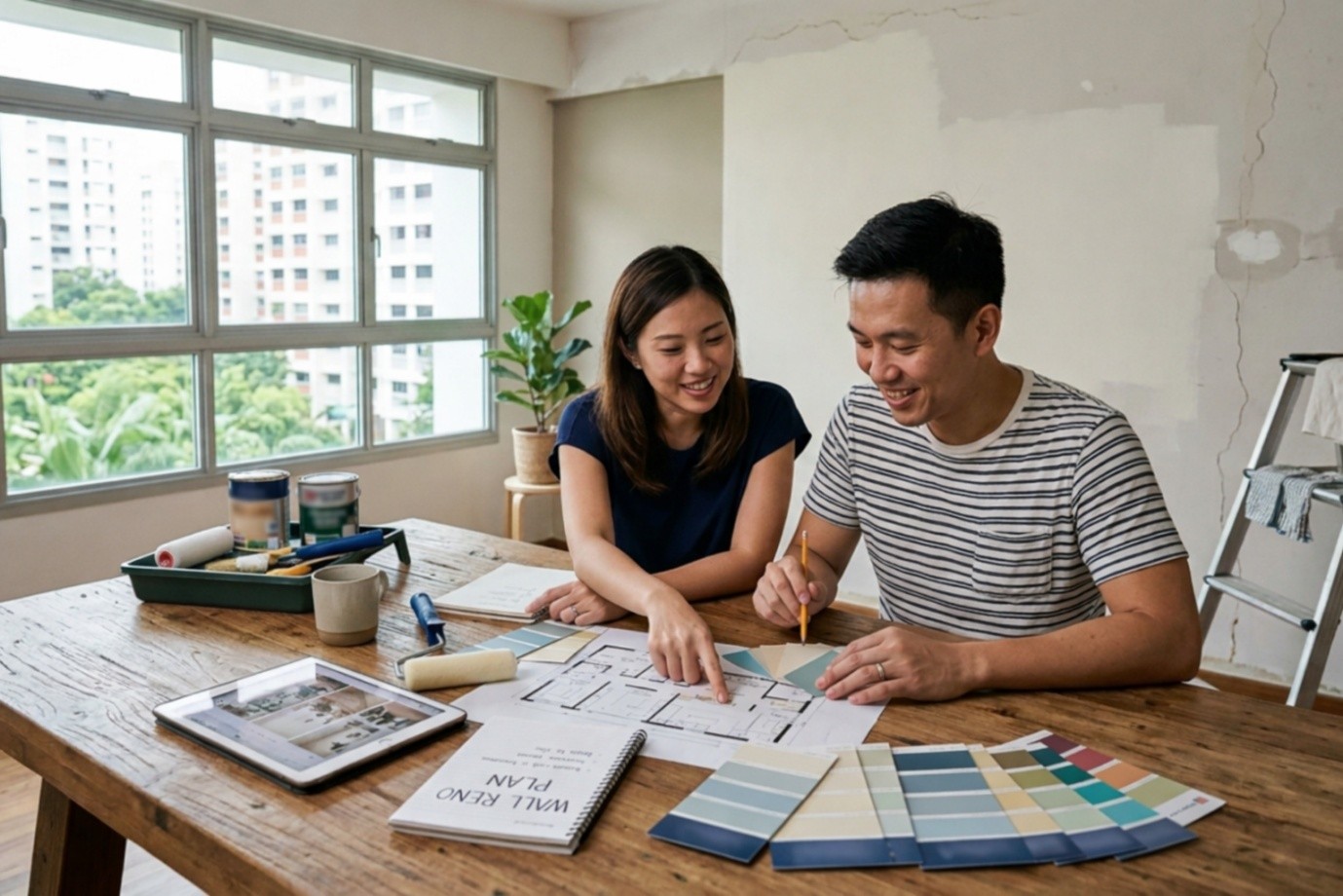
Renovating your home walls is one of the most impactful ways to breathe new life into your living space. Whether you are dealing with faded paint, outdated wallpaper, or hairline cracks that have appeared over time, a wall renovation can transform a dull room into a vibrant sanctuary. However, a successful renovation requires more than just picking a colour and grabbing a brush.
If you are looking for professional Painting Services Singapore, planning is the foundation of a flawless finish. In this comprehensive guide, we will walk you through the essential steps to plan your home wall renovation, ensuring a stress-free process and professional results.
1. Define Your Vision and Goals
Before browsing through catalogs or calling contractors, ask yourself what you want to achieve.
- Aesthetic Change: Are you looking to modernize the space with a “Minimalist Scandic” look, or do you prefer a bold, “Industrial” accent wall?
- Functional Improvements: Do you need moisture-resistant paint for a kitchen or bathroom? Or perhaps easy-clean, scrubbable paint for a child’s playroom?
- Property Value: If you are planning to sell or rent out your property in Singapore, a neutral palette is often the best choice to appeal to a wider audience.
2. Assess the Current Condition of Your Walls
Before applying a single drop of paint, you must understand the “canvas” you are working with. Walk through your home and inspect the walls for:
- Cracks and Holes: Small hairline cracks are common in Singapore due to humidity and building settlement, but deep cracks may require structural inspection.
- Mould and Dampness: Given Singapore’s tropical climate, check for “bubbling” paint or dark spots, which indicate moisture issues.
- Texture: Is the current wall smooth, or does it have a “popcorn” or sand-spray texture? Removing texture is a labour-intensive process that must be budgeted for.
3. Choosing the Right Colour Palette and Materials
This is often the most exciting part of a home wall renovation. However, it can also be the most overwhelming.
The Power of Colour
Light colours like off-white, beige, and light grey make small HDB flats feel more spacious and airy. Darker tones like navy or forest green add drama and sophistication but are best used as accent walls or in well-lit rooms.
Material Selection
While paint is the most common choice, consider other options:
- Wallpaper: Great for adding intricate patterns and textures.
- Wainscoting: Adds a classic, architectural feel to dining rooms and hallways.
- Textured Paint: Brands like Paint offer “Momento” or “Ambiance” collections that mimic stone, velvet, or metallic finishes.
When hiring Painting Services Singapore, always ask for a physical colour card rather than relying on digital screens, as lighting significantly affects how a colour appears.
4. Setting a Realistic Budget
A wall renovation can range from a few hundred dollars for a DIY single room to several thousand for a full-house professional job. Your budget should account for:
- Labor Costs: Professional painters provide speed, quality, and cleanliness.
- Paint Quality: Premium paints are more expensive but offer better coverage (requiring fewer coats) and last longer.
- Supplies: If DIY-ing, don’t forget painters’ tape, drop cloths, rollers, extension poles, and sandpaper.
- Contingency: Always set aside 10% for unexpected repairs, such as discovering hidden mould.
5. Hiring Professional Painting Services Singapore
While DIY is an option, many Singaporean homeowners prefer hiring professionals to ensure a high-quality finish and save time.
Insurance and Warranty: Ensure the company is insured and offers a warranty against peeling or flaking.
- Reviews and Portfolios: Check platforms like Google Reviews or the Fixlaa website to see previous work.
- Transparency: A good contractor will provide a detailed quote that breaks down the number of coats, the brand of paint used, and the estimated timeline.
6. Preparation: The Key to Longevity
Preparation is 70% of the work in any renovation. If you are doing it yourself or preparing the house for contractors, follow these steps:
- Clear the Room: Move furniture to the center of the room and cover it with plastic sheets.
- Remove Fixtures: Take down curtains, wall art, and unscrew switch plate covers.
- Surface Cleaning: Dust and wash walls with a mild detergent to remove grease and grime, ensuring the new paint adheres correctly.
- Patch and Sand: Fill holes with putty, let it dry, and sand it smooth.
7. The Renovation Process
If you are painting, the standard sequence is:
- Priming: Never skip the sealer/primer, especially on new walls or when changing from a dark to a light colour. In Singapore, an alkaline-resistant sealer is essential to prevent “chalking.”
- Cutting In: Paint the edges, corners, and around trim with a brush.
- Rolling: Use a roller for the large flat surfaces. Two coats are usually the minimum for a professional look.
- Drying: Allow ample drying time between coats, especially during the rainy season when humidity is high.
8. Final Inspection and Cleanup
Once the renovation is complete:
- Check for Consistency: Look at the walls from different angles and under different lighting (natural daylight vs. evening bulbs).
- Touch-ups: Fix any drips or missed spots immediately.
- Ventilation: Keep windows open to allow VOCs (Volatile Organic Compounds) to dissipate.
- Waste Disposal: Dispose of leftover paint and materials according to local NEA regulations.
Why Choose Fixlaa for Your Wall Renovation?
At Fixlaa, we understand that your home is your sanctuary. Our team of experts provides top-tier Painting Services Singapore, ensuring that every brushstroke brings you closer to your dream home. From colour consultation to the final cleanup, we handle the hard work so you can enjoy the results.
FAQ
1. How long does a home wall renovation take?
The duration depends on the size of the home and the condition of the walls. Most interior painting projects take between 2 to 5 days.
2. Why should I hire professional Painting services Singapore?
Professional painters ensure proper surface preparation, high-quality paint application, and long-lasting results.
3. What type of paint is best for interior walls?
Emulsion paint is commonly used for interior walls because it provides a smooth finish and is easy to maintain.
4. How often should home walls be repainted?
Most homes require repainting every 5 to 7 years depending on wear, climate, and paint quality.
5. How do I choose the right painting service?
Look for experienced companies with good reviews, professional tools, and reliable customer support like Fixlaa.